 Caregiving · Working Parents
Caregiving · Working Parents
Your child's caregiver knows things about them you don't. That's okay.
On letting go of the idea that knowing everything makes you a better parent
March 15, 2026 · 5 min read
There was a child I cared for — three years old, quiet in the way that some children are quiet, the kind of quiet that gets mistaken for shyness. At home, his mother told me, he barely spoke at mealtimes. Ate what was put in front of him, didn't ask for much, went along with things.
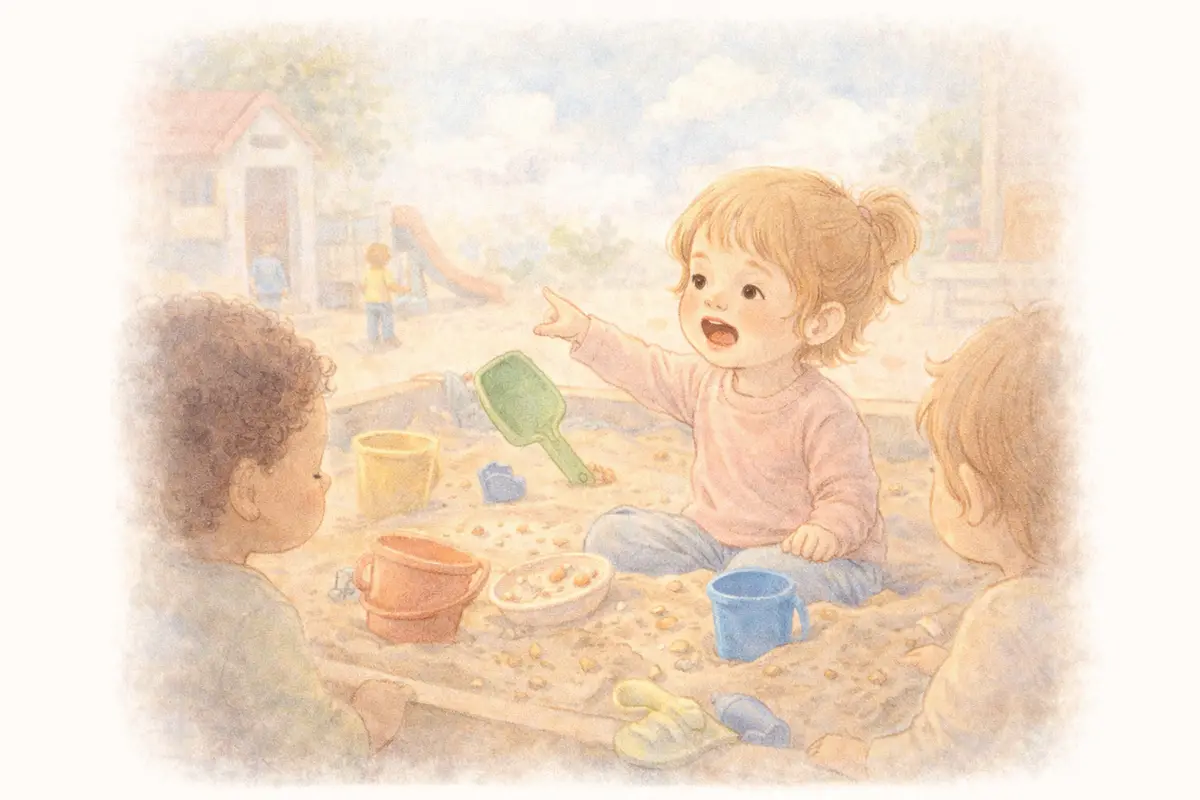
At daycare, he was the one narrating the entire sandpit. Full sentences. Opinions about whose bucket was whose. A running commentary on the clouds.
When I mentioned it to his mother — gently, as a joy, not a revelation — she went very still. Then she said: "I didn't know he could do that."
She wasn't a bad mother. She was an excellent one. But she had been looking at her child in one light, and we had been watching him in another. Both pictures were true. Neither was complete without the other.
The version of your child you don't see
Every child has a daycare self. It is not a performance, and it is not who they "really" are — it is simply who they are in that context, with those people, in that particular world. Just as you are different at work than you are at home, your child is different at daycare than they are with you. This is not a gap in your knowledge. It is evidence that your child is developing exactly as they should — learning to exist in relationships beyond the one they were born into.
What good caregivers know — and what parents sometimes find quietly painful — is that children often show their most expansive selves outside the home. The boldness, the leadership, the unexpected tenderness with a younger child. These things can emerge in daycare before they emerge at the dinner table, because daycare is a low-stakes rehearsal space. Your child can try on versions of themselves without the weight of your hopes and fears watching.
What it feels like to find out
I have watched parents receive this kind of information with a complicated face. There is delight in it — of course there is. But there is something else too. A small, private grief that they weren't there to see it. A flicker of something that asks: do they know my child better than I do?
The answer is: in some ways, yes. And that is entirely by design.
Your child's caregiver spends hours with them in a specific environment, watching specific behaviours, in a professional capacity shaped by training and experience. They will notice which children your child gravitates toward, how they handle frustration when you're not watching, whether they lead or follow, whether they recover quickly from upsets or need time and space. This is their expertise. It is also, genuinely, a gift they are giving your child.
The trap of needing to know everything
There is a version of modern parenting that treats information as love — the more you know about your child, the better parent you are. Every milestone documented, every mood tracked, every development discussed and Googled and cross-referenced. It is exhausting and, more to the point, it sets an impossible standard. You cannot be everywhere. You were never meant to be.
Working parents feel this acutely. The hours you spend away from your child are hours someone else is watching them grow — and that can feel, on hard days, like loss. What I want to offer you instead is this: those hours are not a gap in your parenting. They are a contribution to it. The relationships your child builds at daycare, the confidence they develop in a world that isn't centred on you, the skills they bring home at the end of the day — you made those possible by choosing this.
What to do with what you don't know
Ask, but ask with curiosity rather than anxiety. "What did she enjoy today?" lands differently than "Was she okay?" One opens a conversation; the other invites reassurance. Good caregivers want to share what they see — give them the opening to do it.
When something surprises you — a new word, a new friend, a new fear — receive it. Let it expand your picture of who your child is becoming. You are not behind. You are simply watching from a different vantage point, and the view from where you stand matters just as much.
The caregiver who knows your child's sandpit voice, their favourite story, the exact face they make before they cry — that person is not your competition. They are your village. And your child, held by both of you, is richer for it.